


🏺 Clayful CPH Studio Guide: Types of Clay
Discover the unique properties of earthenware, stoneware, porcelain, and more — and how to choose the right clay for your next ceramic project.

Earthenware
Used for thousands of years, earthenware is a traditional low-fired clay body known for its warm, earthy colors and forgiving nature. Its lower firing range (1000–1150°C) means it remains porous unless glazed, and its soft, plastic texture makes it ideal for beginners.
Many folk pottery traditions around the world — from Mexico to the Mediterranean — still rely on this clay. Though it's less durable than high-fire clays, earthenware excels in expressive, decorative pieces.
- Texture: Soft, very plastic
- Firing Range: 1000–1150°C
- Best For: Beginners, decorative pieces, tiles
🏺Earthenware — For Makers
🏺Earthenware — For Makers
Temperature range: Cone 06 (~999 °C) to Cone 04 (~1060 °C). Low-fire body that remains somewhat porous even after glaze firing.
Atmosphere: Typically oxidation (electric kilns), but can also be used in pit and raku firings for rustic surfaces.
Technical properties:
- Plasticity: High — easy to shape, good for handbuilding and wheel throwing.
- Shrinkage: ~6–10% (relatively low compared to stoneware).
- Absorption: 5–15% after glaze firing (remains porous unless fully glazed).
Common challenges:
- Fragility: Softer and chips more easily than high-fired clays.
- Porosity: Can absorb water if not glazed fully.
- Warping:
- Thin slabs bend if not supported properly.
- Fast heating/cooling increases deformation risk.
- Glaze issues:
- Pinholing if bisque is underfired.
- Crazing is common due to mismatch between glaze fit & clay shrinkage.
Tips & best practices:
- Bisque at Cone 04 for better glaze adhesion.
- Glaze both inside & outside to reduce water absorption.
- Use slips & underglazes — colors remain vivid at low-fire temps.
- Always test for food safety.
Common uses:
- Decorative tiles & wall pieces.
- Majolica ware (painted tin-glazed earthenware).
- Rustic tableware & planters (if fully glazed).
- Brightly colored slipware.

Stoneware
Stoneware is a mid- to high-fire clay body known for its strength and versatility. Fired at 1200–1300°C, it vitrifies completely, creating a durable, water-resistant surface even without glaze. Its natural tones and rich textures make it a favorite for everyday ceramics and studio work alike.
It holds shape well on the wheel or in handbuilding, and pairs beautifully with both rustic and refined glaze finishes.
- Texture: Smooth to slightly gritty
- Firing Range: 1200–1300°C
- Best For: Functional ceramics, mugs, bowls, tableware
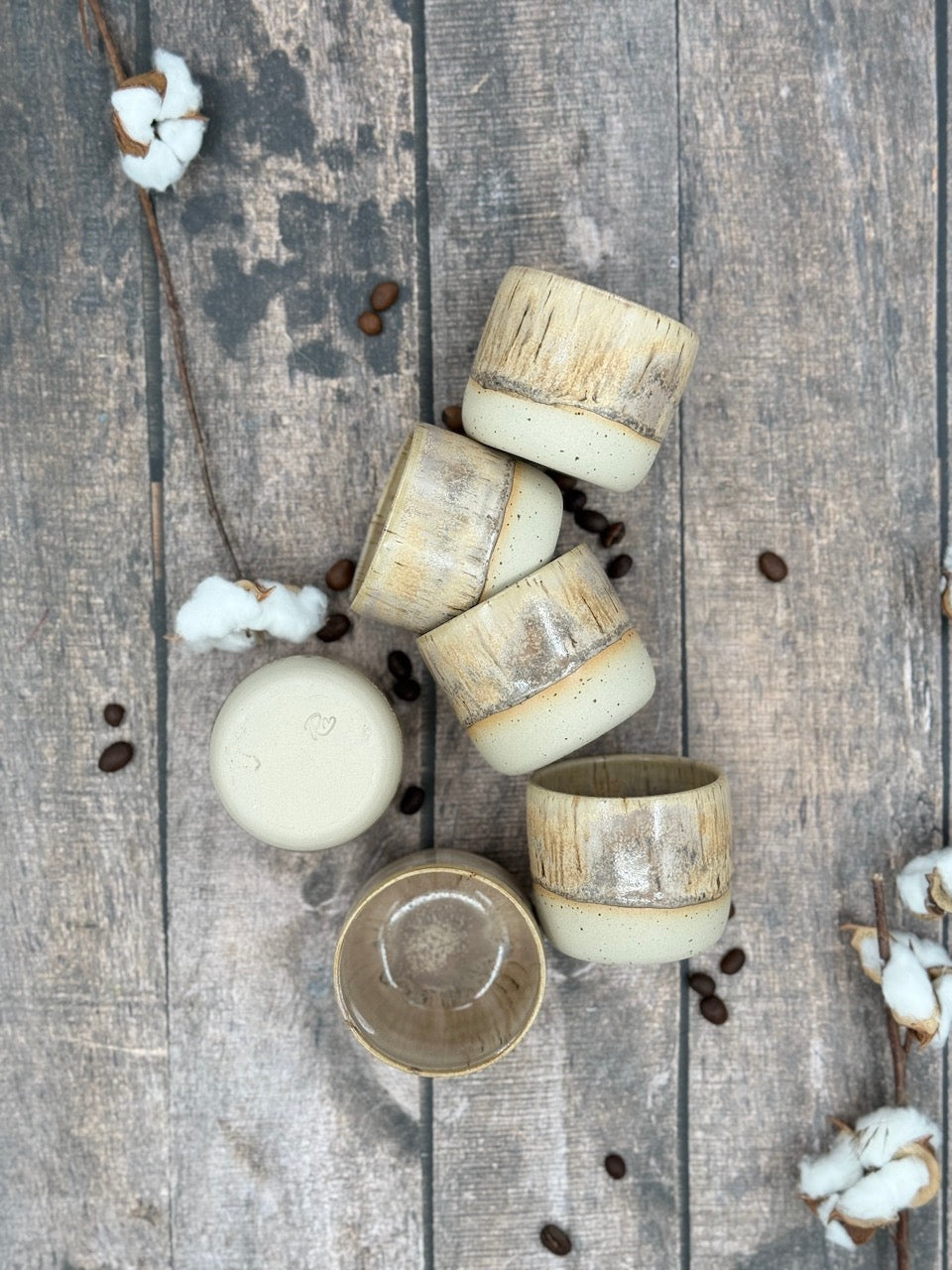
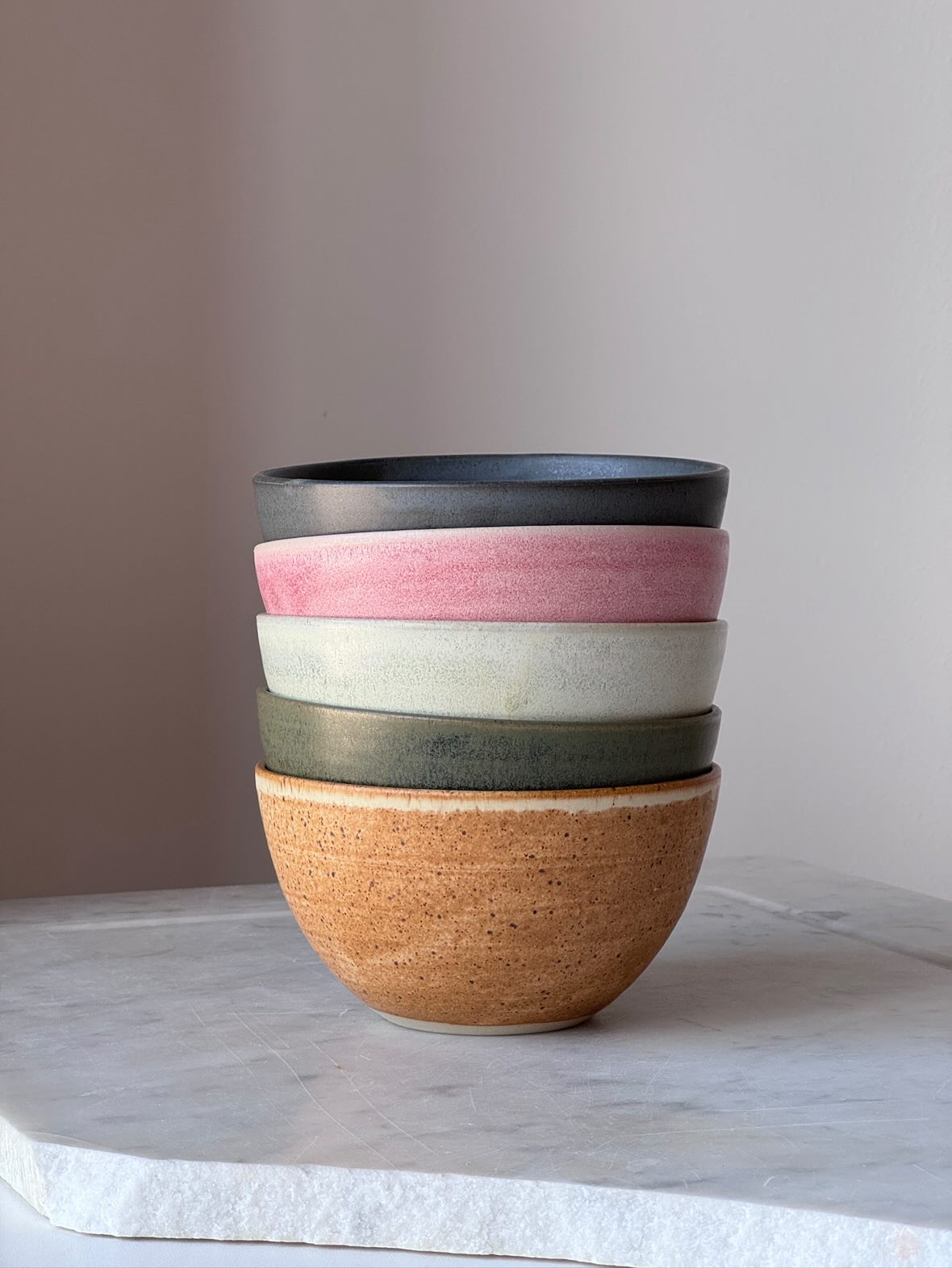
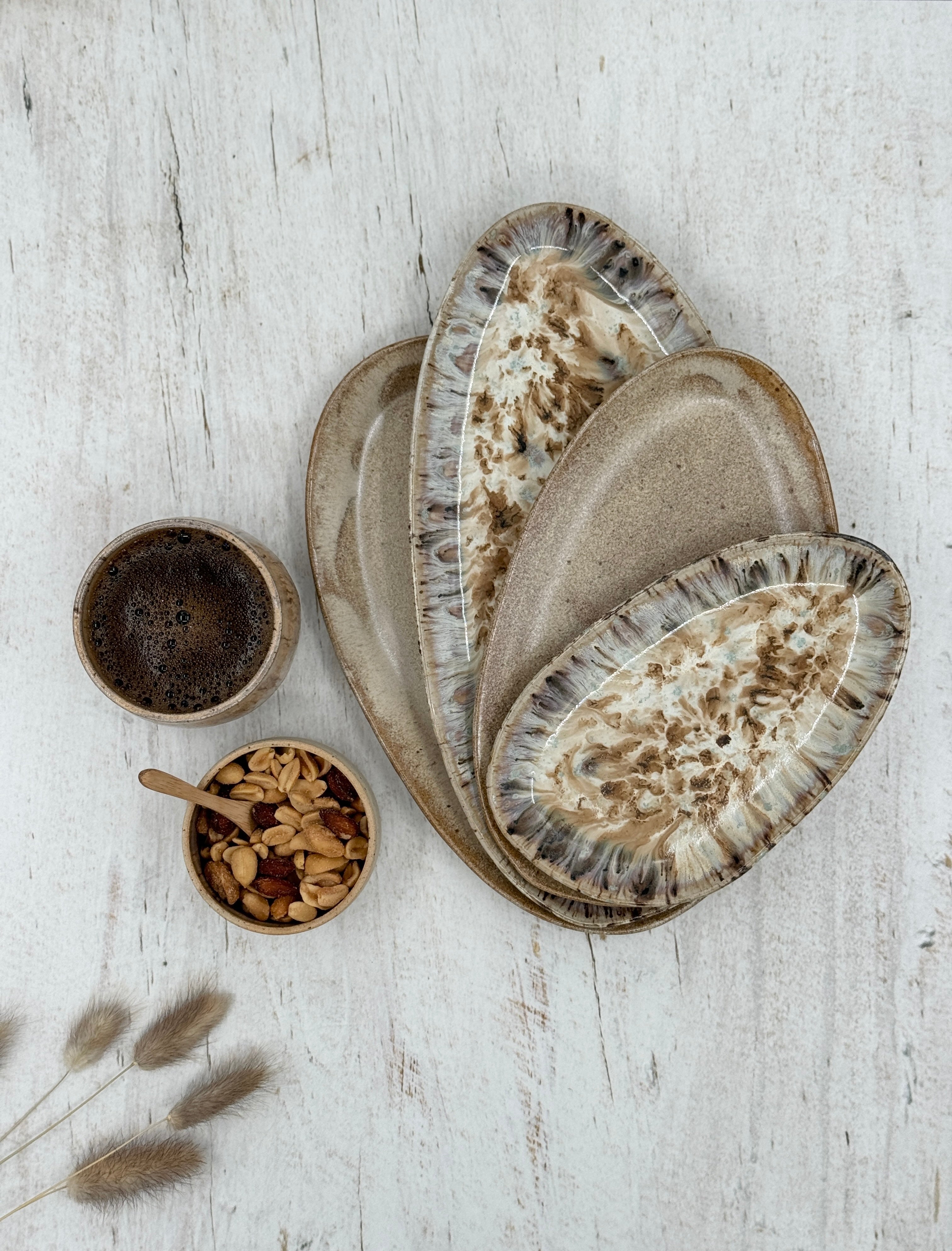
Picture by Julie Damhus
🪨Stoneware — For Makers
🪨Stoneware — For Makers
Temperature range: Cone 6 (~1220 °C) to Cone 10 (~1300 °C). Mid- to high-fire body, vitrifies at higher end.
Atmosphere: Works in oxidation (electric kilns) or reduction (gas/wood), both affecting final glaze & clay color.
Technical properties:
- Plasticity: Medium to high — versatile for wheel throwing & handbuilding.
- Shrinkage: ~10–14% (moderate).
- Absorption: 1–6% after glaze firing (dense, semi-vitreous).
Common challenges:
- Warping in wide/flat forms at higher cones.
- Glaze fit issues:
- Shivering if glaze contracts more than the clay.
- Crazing if glaze contracts less.
- Uneven vitrification between different stoneware blends.
Tips & best practices:
- Test clay/glaze compatibility — not all stonewares fit all glazes.
- Bisque higher (Cone 04) to reduce organic burnout problems.
- For reduction, allow slower cooling for richer glaze colors.
Common uses:
- Durable tableware & cookware.
- Functional ceramics like mugs, bowls, plates.
- Outdoor pieces (resistant to weather if vitrified).
- Studio pottery with rustic, earthy aesthetics.

Porcelain
The most refined clay body, porcelain is prized for its whiteness, strength, and translucency. It has a silky texture and fires at high temperatures (1250–1350°C). Porcelain becomes vitrified and luminous — ideal for fine tableware and intricate sculptural work.
It can be challenging to work with due to its low plasticity, but in skilled hands, it creates pieces of stunning delicacy and elegance.
- Texture: Very smooth, low plasticity
- Firing Range: 1250–1350°C
- Best For: Fine tableware, delicate forms, sculptural work
Picture by Wauw Design
🔥Porcelain — For Makers
🔥Porcelain — For Makers
Temperature range: Cone 10–12 (~1280–1350 °C). High-fire body, fully vitrifies at maturity.
Atmosphere: Works in both oxidation and reduction, but translucency and glaze color vary greatly.
Technical properties:
- Plasticity: Low — fine particle size, prone to slumping & cracking during forming.
- Shrinkage: High (~14–17%).
- Absorption: <1% (fully vitrified, glass-like).
Common challenges:
- Forming difficulties:
- Less forgiving on the wheel.
- Collapses easily if walls are too thin.
- Drying cracks due to fine particle size.
- Warping during high-temp glaze firing.
- Glaze crawling if surface not cleaned properly.
Tips & best practices:
- Use very controlled drying — cover with plastic until leather-hard.
- Thin applications of glaze prevent crawling.
- Bisque slightly higher to strengthen ware before glaze firing.
- Take advantage of translucency — thin walls reveal light beautifully.
Common uses:
- Fine tableware & luxury ceramics.
- Translucent lighting pieces (lamps, lanterns).
- Delicate sculptural works.
- Minimalist, clean aesthetic pottery.

Paper Clay
Paper clay is a contemporary clay body blended with cellulose fibers, usually from paper pulp. It’s lightweight, structurally strong, and incredibly flexible. You can join dry-to-wet parts, make fine repairs, and build ambitious forms with minimal cracking.
When fired, the paper burns away, leaving a durable ceramic structure. It’s a favorite among sculptors and mixed media artists pushing the boundaries of traditional clay.
- Texture: Lightweight, slightly fibrous
- Firing Range: Varies (depends on base clay)
- Best For: Sculptural forms, mixed media, repair work
Photo by Papier Atelier London
🌿 Paper Clay — For Makers
🌿 Paper Clay — For Makers
Temperature range: Depends on base clay — can be earthenware, stoneware, or porcelain. Fires the same as its parent clay body.
Atmosphere: Works in both oxidation and reduction. Fibers burn out cleanly during firing.
Technical properties:
- Plasticity: Very high — fibers add strength, making it easier to handbuild even with thin walls.
- Shrinkage: Lower than the parent clay, since paper fibers burn away and reduce stress.
- Absorption: Matches the parent clay after firing (fibers fully combust).
Common challenges:
- Uneven drying if clay is too thick — surface may dry faster than core.
- Fibers visible if surface isn’t smoothed properly before bisque.
- May feel spongy or “less dense” before firing, compared to standard clay.
Tips & best practices:
- Great for repairing cracks — paper fibers help bond clay pieces together.
- Allow thorough drying before firing — thick sections can trap steam.
- Sand or burnish surfaces before bisque if a smooth finish is desired.
- Ideal for mixed-media or sculptural projects due to added flexibility.
Common uses:
- Large handbuilt sculptures (lighter and less prone to collapse).
- Thin, delicate forms that would break in standard clay.
- Repairing cracks and joins in greenware.
- Educational settings — forgiving for beginners experimenting with form.

Grogged Clay
Grogged clay is a clay body that contains fine particles of fired clay (grog), which adds structure and reduces shrinkage. This makes it ideal for large or complex forms that need extra stability during drying and firing.
The gritty texture isn’t for everyone, but it gives the surface a raw, organic feel — perfect for handbuilt vessels, sculpture, or architectural ceramics.
- Texture: Gritty, sandy
- Firing Range: Depends on base clay
- Best For: Large pieces, handbuilding, structural work
Photo by Tony Hansen
🌊 Grogged Clay — For Makers
🌊 Grogged Clay — For Makers
Temperature range: Depends on base clay (earthenware, stoneware, or porcelain) — grog doesn’t change firing range.
Atmosphere: Performs well in both oxidation and reduction. Grog particles create textural effects in reduction firings.
Technical properties:
- Plasticity: Reduced compared to smooth clays — grog makes it less “sticky” but stronger structurally.
- Shrinkage: Lower than un-grogged clay, since grog particles resist shrinkage.
- Absorption: Slightly higher surface porosity if grog is coarse and exposed.
Common challenges:
- Less suitable for fine detail — coarse grog creates a gritty surface.
- Harder on hands and tools during wheel throwing.
- Edges of grog particles may “drag” through glazes, leaving rough spots.
Tips & best practices:
- Excellent for large forms — reduced shrinkage prevents cracking/warping.
- Choose finer grog for wheel throwing, coarse grog for sculpture.
- Smooth surfaces with a soft rib or sponge before drying.
- Glazes may break over grog texture, producing rustic visual effects.
Common uses:
- Large sculptural pieces and outdoor ceramics.
- Functional ware requiring durability (planters, garden pots).
- Slab-built work where warping is a risk.
- Rustic stoneware with textured finishes.
Choosing the Right Clay
Your choice depends on the project, firing setup, and the qualities you value most. For versatile functional ware, stoneware is reliable. For fine detail and translucency, porcelain is unmatched. For approachable and forgiving clay, earthenware works well. For creative freedom, paper clay and grogged clays open new possibilities.
- For beginners: Stoneware — forgiving, versatile, durable.
- For fine detail: Porcelain — elegant, translucent, but more challenging.
- For rustic aesthetics: Earthenware — warm tones, soft surface, approachable.
- For sculptural work: Grogged clay — coarse texture, stable for large builds.
- For repairs or delicate builds: Paper clay — strong joins, thin walls, flexibility.
Frequently Asked Questions
Which clay is best for beginners?
Stoneware is the most reliable starting point. It has good plasticity, tolerates a wide firing range, and is less prone to cracking than porcelain.
Is earthenware food-safe?
Yes, but only if it’s glazed and fired properly. Unglazed earthenware stays porous and should not be used for food or drink.
What makes porcelain difficult to work with?
Porcelain has very fine particles and little natural plasticity. This makes it less forgiving to shape and more prone to warping and cracking.
What is paper clay used for?
Paper clay is excellent for repairing cracks, reattaching handles, or building thin, delicate structures. The paper fibers add green strength and reduce warping.
Why use grogged clay?
Grogged clays contain fired particles that improve stability, reduce shrinkage, and give a rustic texture. They’re especially useful for larger sculptural work.
Explore Handmade Ceramics
Curious how different clays look when finished? Browse our collection to see handmade ceramics crafted from stoneware, porcelain, earthenware, and more.